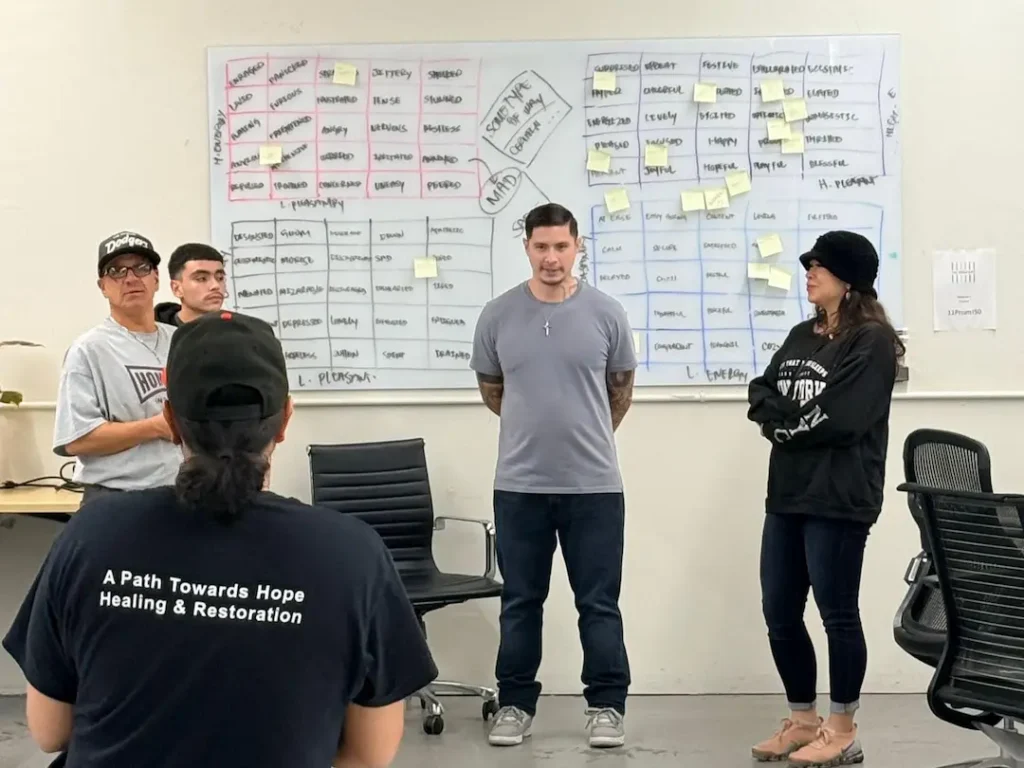
The Prism Way’s Anger Management Program, facilitated by Certified Anger Management Specialists (CAMS-I and CAMS-II), is designed to support individuals in understanding their anger on a deeper level—not just the outward reactions, but the underlying root causes beneath them. Rather than focusing solely on behavioral modification, the program creates a supportive, reflective space centered on personal awareness, emotional regulation, and lasting accountability.
At a Glance
Program Format
- Structured multi-week curriculum
- Interactive group sessions and reflective exercises
- Facilitated by Certified Anger Management Specialists (CAMS-I and CAMS-II)
- Flexible scheduling with community-based cohort options
Core Focus Areas
- Identifying root causes of anger (stress, trauma, grief, and unspoken hurt)
- Practical emotional regulation strategies to respond instead of react
- Conflict resolution and constructive communication skills
- Restorative accountability and relationship repair
Learning Objectives
- Slow down and identify the primary roots of anger, including life stressors, personal trauma, and unresolved emotional hurt.
- Recognize physiological and mental triggers to pause and intervene before reacting impulsively.
- Learn and practice evidence-based emotional regulation and stress-reduction tools.
- Develop constructive communication techniques to navigate high-stress conflicts and de-escalate volatile situations.
- Cultivate self-awareness to establish healthy interpersonal boundaries and strengthen connections with others.
Key Program Pillars
- Root-Cause Exploration: Moves beyond surface-level behavioral compliance to examine unaddressed pain, frustration, and trauma driving reactive habits.
- Emotional Regulation: Equips participants with somatic and cognitive tools to interrupt anger cycles and choose intentional, measured responses.
- Constructive Communication: Replaces aggressive or avoidant patterns with clear, assertive dialogue and healthy conflict management.
- Sustainable Accountability: Bridges court, probation, or parole compliance with meaningful personal growth and long-term behavioral change.
Who It’s For
- Individuals seeking to gain control over reactive behaviors and build healthier relational patterns.
- System-impacted and justice-involved individuals working to satisfy court, probation, or parole requirements.
- Anyone committed to personal healing, emotional regulation, and breaking cycles of conflict in family and community life.