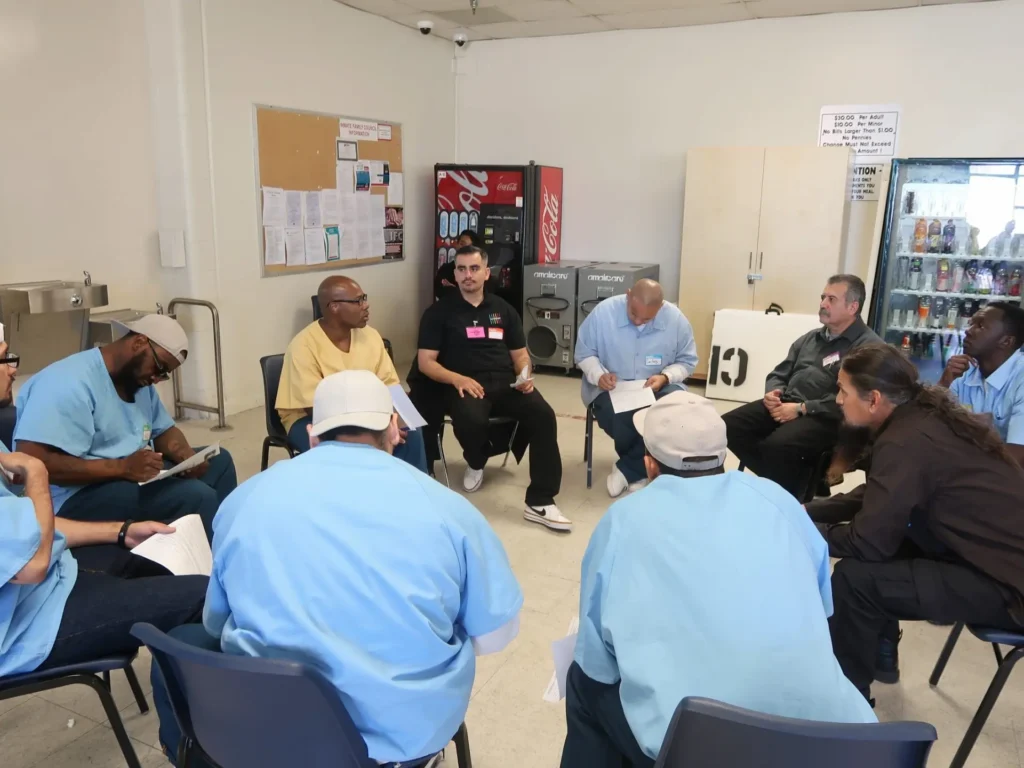
The Prism Way’s Whole Integration of Self Education (WISE) is a trauma-informed, peer-led curriculum designed to foster healing, emotional resilience, and personal transformation. Rooted in the California Model’s commitment to relationship-centered rehabilitation, WISE empowers participants to explore their personal narratives, regulate stress responses, and develop essential emotional intelligence skills through a cognitive and restorative process known as “Prism Priming”.
At a Glance
Program Format
- 8-week structured curriculum
- Weekly 2-hour interactive group sessions
- Facilitated by registered Substance Use Disorder Counselors and Certified Medi-Cal Peer Support Specialists with lived experience
- Currently offered at the California Institution for Men (CIM), California Institution for Women (CIW), Substance Abuse Treatment Facility (SATF)
Core Components
- Trauma Awareness & Healing
- Overcoming Automatic Negative Thoughts (ANTs)
- Growth Mindset & Neuroplasticity
- Emotional Intelligence & Restorative Accountability
Learning Objectives
- Identify pre- and post-birth trauma and evaluate Adverse Childhood Experiences (ACEs) to cultivate self-compassion and mutual empathy.
- Recognize the four primary stress responses (Fight, Flight, Freeze, and Fawn) and apply grounding techniques within the Window of Tolerance.
- Detect and disrupt Automatic Negative Thoughts (ANTs) to replace distorted thinking with healthier cognitive patterns.
- Cultivate a growth mindset using neuroplasticity principles to build personal agency and goal-oriented behaviors.
- Strengthen emotional intelligence, self-awareness, and relational communication using frameworks like Johari’s Window.
- Formulate individualized personal growth plans detailing coping mechanisms, triggers, and restorative commitments.
8-Week Curriculum Breakdown
- Week 1: Creating a Safe Space: Establishing community agreements, fostering emotional safety, exploring leadership, and introducing Prism Way Radio.
- Week 2: Understanding Trauma: Defining pre-birth and lifetime trauma, completing the Adverse Childhood Experiences (ACEs) questionnaire, and building shared empathy.
- Week 3: The Effects of Trauma: Mapping the four stress responses (Fight, Flight, Freeze, Fawn), navigating the Window of Tolerance, and understanding ripple effects.
- Week 4: The Healing Process: Exploring brain chemistry (dopamine, serotonin, endorphins, oxytocin) alongside somatic grounding practices, including stretching and intentional breathing.
- Week 5: Automatic Negative Thoughts: Identifying recurring cognitive distortions and engaging in interactive reframing role-play.
- Week 6: Understanding Mindset: Assessing fixed versus growth mindsets, examining neuroplasticity, and establishing personal growth mindset declarations.
- Week 7: Emotional Intelligence & Self-Awareness: Conducting emotional intelligence evaluations, mapping emotion regulation via emoji charts, utilizing Johari’s Window, and drafting a letter to one’s younger self.
- Week 8: Application: Synthesizing core insights, presenting personal values-based trajectories, and celebrating collective transition and growth.
Who It’s For
- Incarcerated individuals seeking structured personal growth, emotional regulation, and trauma recovery.
- Long-term incarcerated participants, including those in the Long-Term Offender Reentry Recovery (LTORR) Program and serving LWOP, committed to sustained accountability and peer leadership.